Independent
The brothers did not rely on one another for schoolwork. Robert saw that habit of self-direction continue into adult life.

Robert Fleming remembers his brother
Months after Alexander Fleming’s death, his younger brother Robert began writing down the family story. What survives is not a distant biography, but the account of someone who shared the farm, the schooldays and the move from Ayrshire to London.
Read Robert’s account
16 October 1955
Robert began on his seventy-second birthday, seven months after Alec died.
He made no claim to be a medical biographer. His purpose was simpler: to set down what he knew while he could, to correct the legends gathering around a famous name, and to recover pleasant memories of the brother behind it.
That modest purpose is precisely what gives the account its value. Robert could describe Fleming’s science only from outside the laboratory. He could describe his character from a lifetime of evidence.
Lochfield Farm
Alexander was born in 1881; Robert followed in 1883. As the two youngest boys, they roamed together across roughly 800 acres of hill ground, fishing the burns, watching birds and finding their own ways through the landscape.
Robert remembered no attempt by Alec to play the superior older brother. They worked independently at school and met as equals outside it. The self-reliance mattered later, but at the time it was simply how farm children got on.
“There was no need to feel lonely at Lochfield if you liked wild life.”Robert J. Fleming
Learning to notice
Robert’s pages do not pretend that childhood wildlife made penicillin inevitable. They do show two boys learning a landscape in detail: which streams held trout through dry weather, where birds nested, how seasons altered the farm and when a small change meant something.
Later accounts often turned this into a neat origin story for a scientist. Robert’s version is better. It is specific, practical and free of prophecy.
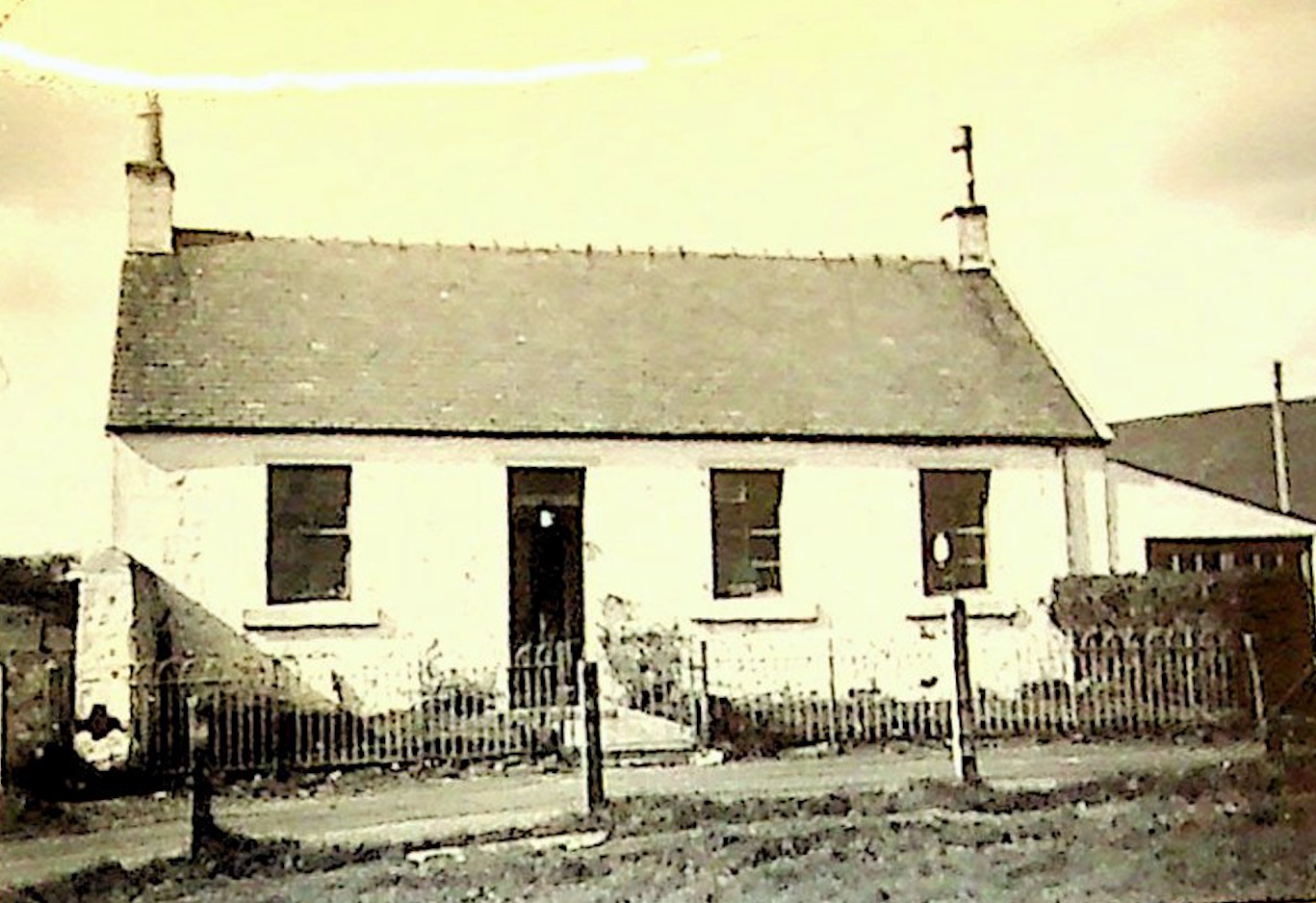
The wee moorland school
The route from Lochfield ran down the glen, across a footbridge without a handrail—and sometimes without all its planks—then up through fields. Wet shoes were expected. Spare shoes and stockings travelled slung around the children’s necks.
One young teacher handled every age group, seldom more than a dozen pupils. At times nine were Flemings or Loudons. The methods were informal, but when the children moved to Darvel School they were consistently ahead.
Ayrshire to London
The brothers followed older family members south. At the Polytechnic, Alexander moved rapidly through the forms, then took work as a junior clerk in a shipping office. Robert entered the optical trade and later established a manufacturing business with their brother John.
Medicine became possible through a family inheritance, scholarships and the advice of their doctor brother Tom. Robert’s account dismantles the more dramatic legend that a grateful Churchill family paid for Alexander’s education. They did not.

Character before celebrity
The brothers did not rely on one another for schoolwork. Robert saw that habit of self-direction continue into adult life.
Fleming’s gift was not a mythical photographic memory, Robert argued, but the ability to understand what mattered quickly.
Even after honours arrived from around the world, Alec remained recognisable to the family that knew him before them.

Discovery and consequence
Robert left the technical biography to scientists. He wrote instead about what fame did to an ordinary private life: the reporters, honours, foreign journeys, public expectations and the strange distance between Lochfield and hotel rooms crowded with photographers.
The later instalments also preserve Alexander’s own words from his Edinburgh University Rectorial Address, allowing the scientist to explain chance, preparation and penicillin for himself.
The papers survive
Frank and Ruby Donnelly received the yellowed newspaper cuttings unexpectedly from a woman who came to their door from Strathaven. Recognising their value, they kept them safe.
The memoir ran in the Kilmarnock Standard across 21 weekly instalments in 1962. The complete surviving set—106 scanned sections—is available here as the evidence behind this page.
Read the complete newspaper series