
Loudoun Hill · 10 May 1307
Bruce chose
the ground.
Then held it.
Beneath Loudoun Hill, a fugitive king turned a smaller force and a carefully chosen strip of ground into a victory that strengthened his claim to Scotland.
Read the story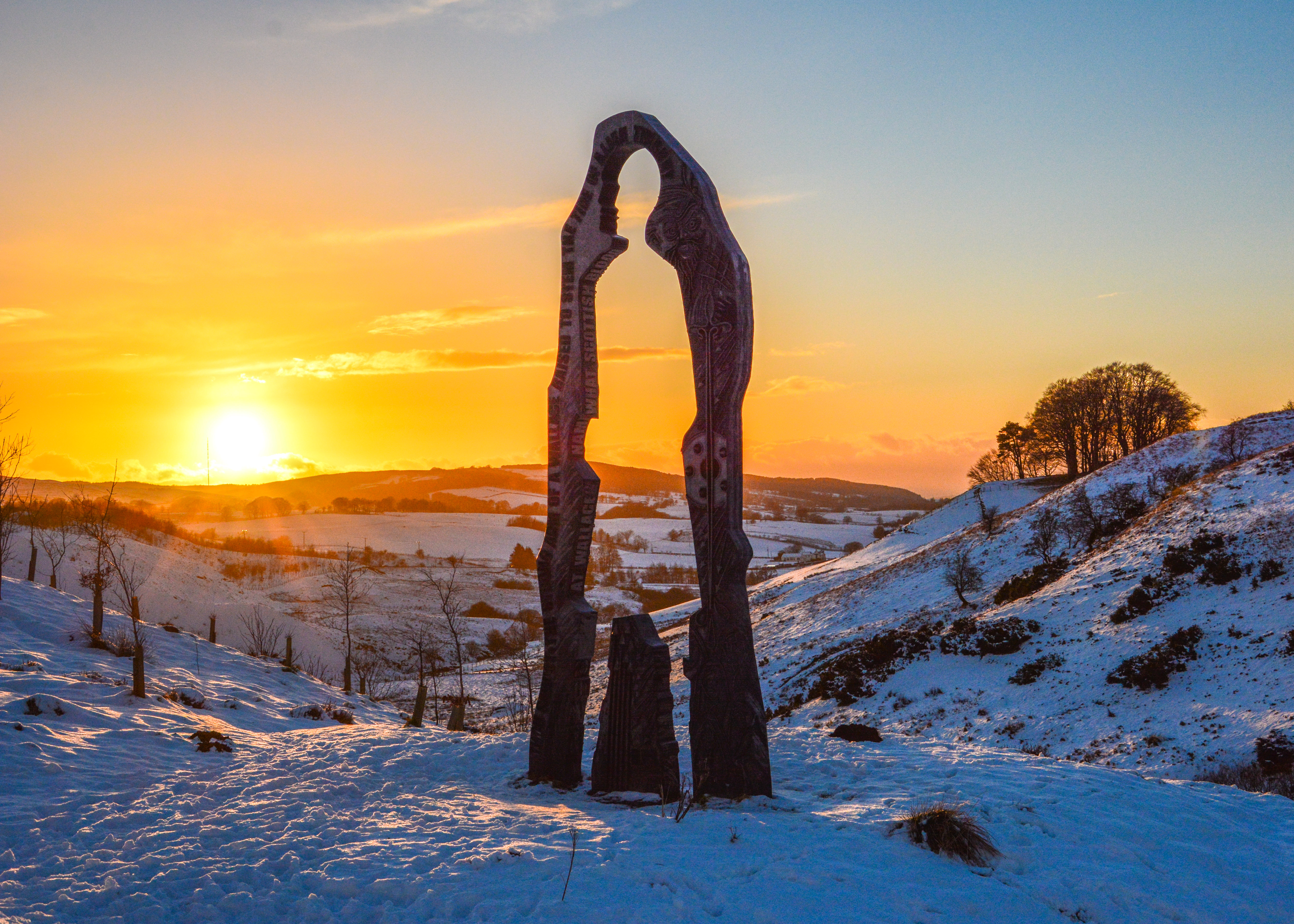
A king without a kingdom
Defeated.
Hunted.
Not finished.
Robert Bruce was inaugurated King of Scots in 1306. Within months, Aymer de Valence had defeated him at Methven and Bruce was driven into a dangerous year of flight.
Another reverse at Dalrigh broke what remained of his force. Where Bruce spent the winter is uncertain, but by February 1307 he was back in the south-west, rebuilding his campaign.
The return was costly. His brothers were captured and executed after a failed landing near Loch Ryan. Bruce, meanwhile, struck at his enemies around Carrick and won a small but useful success at Glen Trool.
He had learned what an outnumbered army could not afford: an uncontrolled fight on ground chosen by the enemy. At Loudoun Hill, he made the opposite choice.
The ground was the plan
Make the field
fit the force.
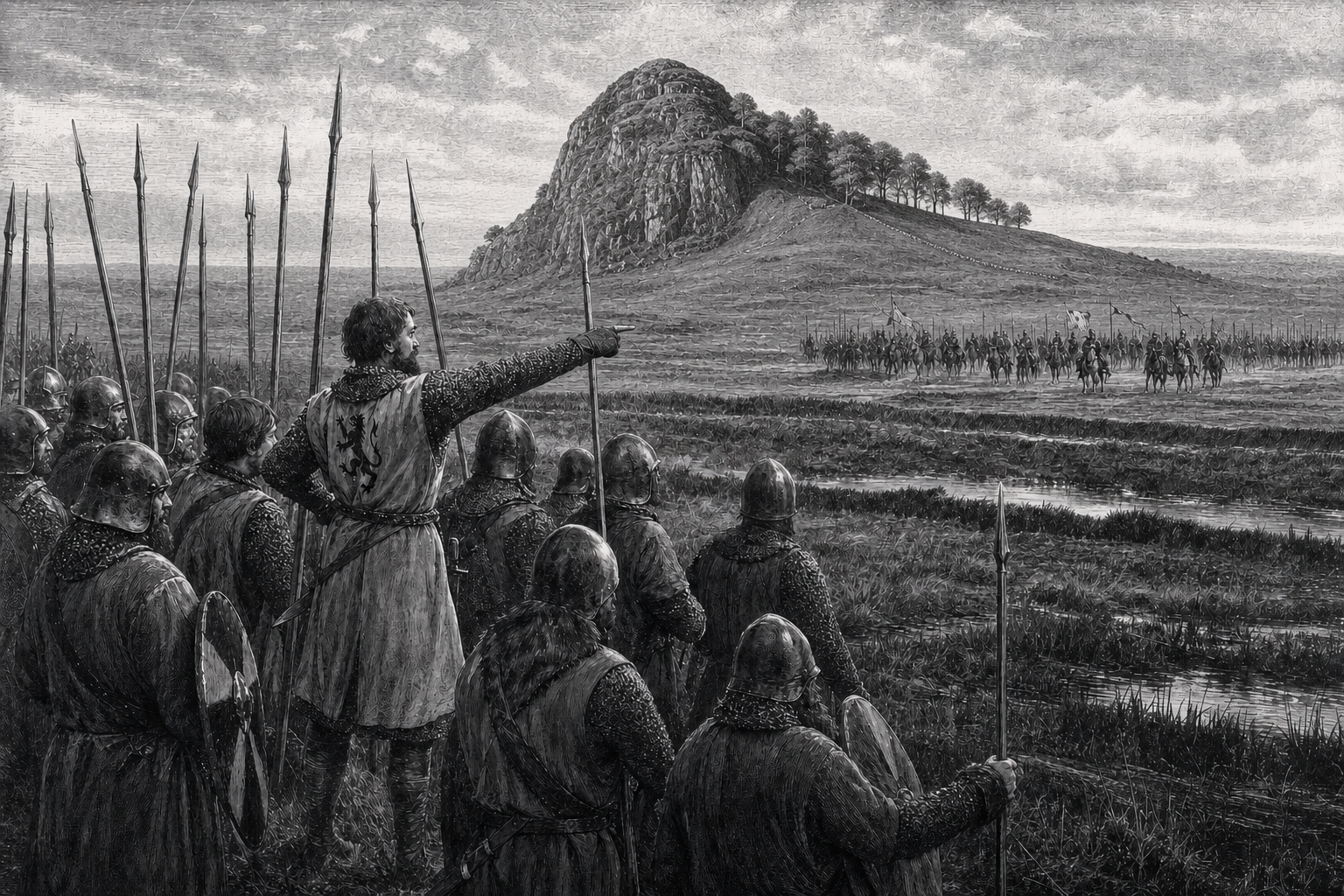
Bruce reached Loudoun Hill first. South of the hill, the firm ground ran between areas of deep marsh. The usable approach was only about 500 yards wide.
According to John Barbour’s later chronicle, Bruce narrowed it further by digging three ditches across the English line of advance. Openings were left, but the mounted force could no longer attack across a broad front.
The account was written decades after the battle, not by an eyewitness. Its central point, however, matches the landscape: this was a position designed to deny cavalry room and bring the two forces together on Scottish terms.
The battle
A charge
without room.
The approach narrows
Valence’s mounted troops advanced between marshy ground and towards the prepared gaps. Their numbers could not be brought fully to bear.
The spears hold
Bruce’s spearmen met the compressed attack in close formation. The English cavalry had little space to build momentum or move around the Scottish line.
The line breaks
Pressure passed back through the crowded English ranks. The attack failed, the force withdrew and Aymer de Valence escaped the field.
Why it mattered
Victory changed
what seemed
possible.
Loudoun Hill was one of Bruce’s first important battlefield victories after becoming king. It gave his campaign authority as well as momentum.
Edward I resolved to confront Bruce in person but died while travelling north. The war continued, yet the balance was no longer what it had been after Methven.
Seven years before Bannockburn, Loudoun Hill showed the same discipline: prepare the ground, restrict the mounted attack and trust an organised infantry line to hold.
The battlefield today
The landscape
still explains
the battle.
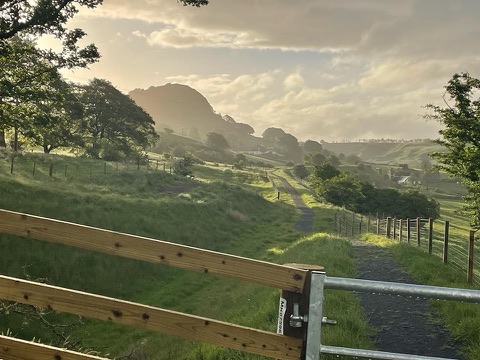
The hill, the approaches and the ground around them remain essential to understanding what happened. The site was added to Scotland’s Inventory of Historic Battlefields in 2012, recognising both its national importance and the value of the surviving landscape.
Historic Environment Scotland recordSources and interpretation
This account draws on the Historic Environment Scotland battlefield record and the supplied historical summary. Details of Bruce’s field preparations derive from John Barbour’s later chronicle and should be read as a valuable historical account rather than an eyewitness report. The Wallace tradition belongs to Blind Harry’s much later literary account and is distinguished here from the documented battle of 1307.