Tapestry
When mechanisation displaced handloom work, Morton introduced handwoven tapestry, creating employment that could use the weavers’ existing skill.

Alexander Morton · 1844–1923
He left school at nine and began work on the surrounding farms. From a handloom in a Darvel cottage, Alexander Morton built a textile enterprise whose lace, fabrics and carpets travelled across the world.
Begin his story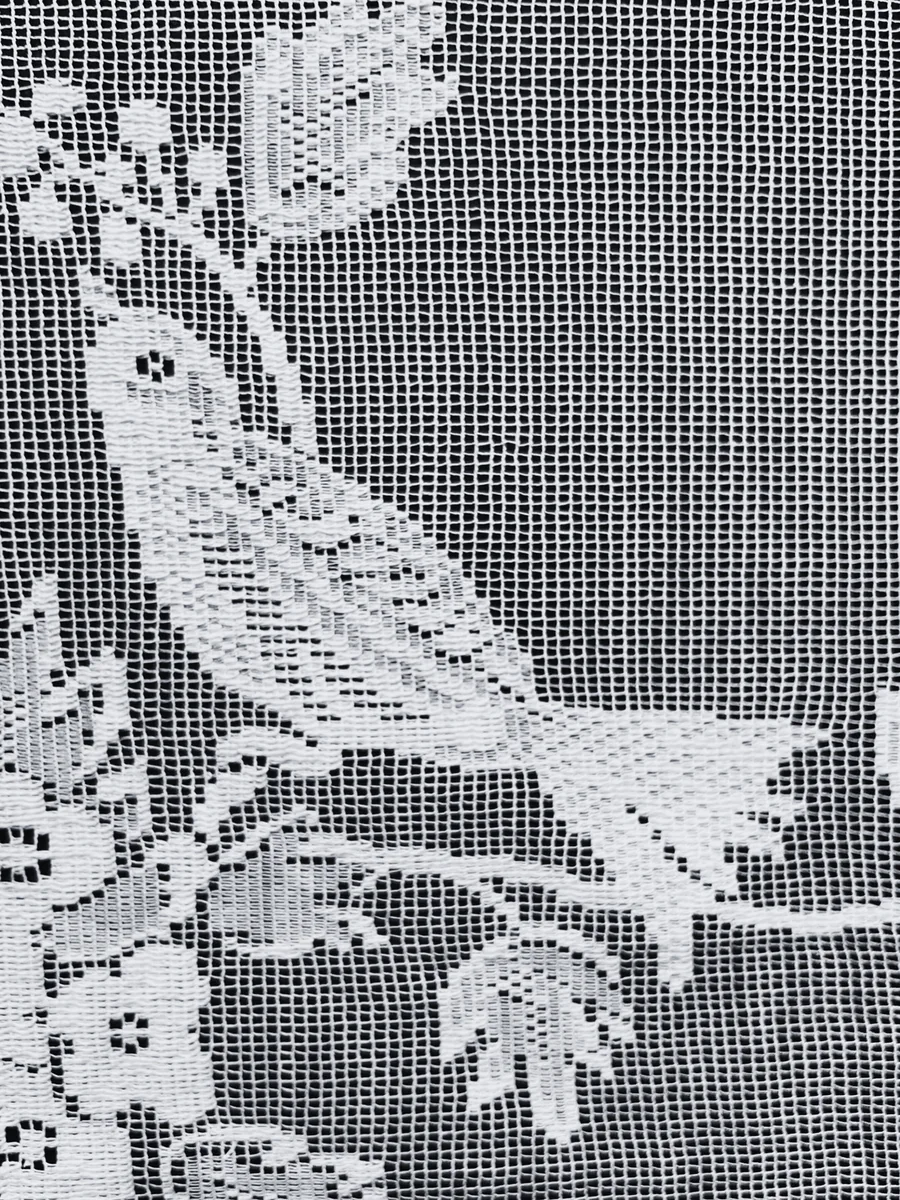
A hard beginning
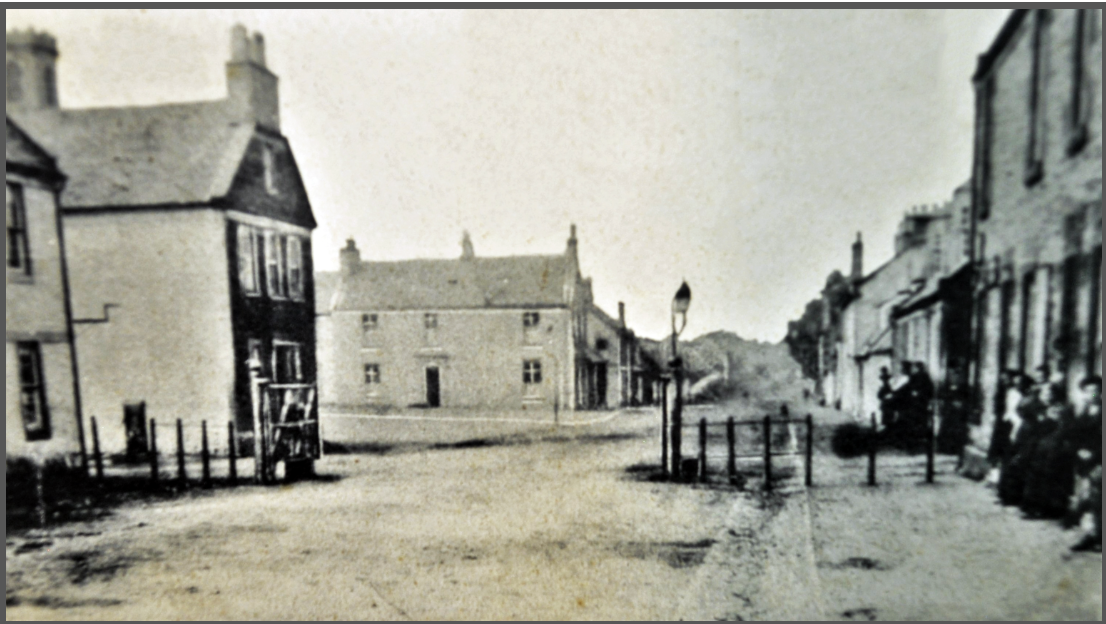
Morton was born at Mount Holy—known locally as Munt Hilly—in Ranoldcoup Road. His father, Gavin or “Guy” Morton, combined handloom weaving with work as a woodman on the Lanfine Estate.
Guy died when Alexander was six. At eight the boy helped with the harvest at Greenbank; at nine his formal schooling ended and he went herding on a moorland farm near Muirkirk. He returned home at twelve to learn weaving beside his brother.
By fifteen he had saved enough to buy a loom. The education that followed was largely his own: the history of his craft, the behaviour of markets, and a close study of how things were made.
A partnership begins
Alexander met Jeanie Wiseman at a church singing class. Both won prizes; he later asked her to partner him at a dance. They married when he was nineteen and she was eighteen, setting up home in a “but and ben” at 104 West Main Street.
Fifty years later, Morton described Jeanie as the anchor and centre of his life: steady, practical and ready to “pour oil on troubled waters”. His public reputation rested on restless energy. His own account gave Jeanie credit for the stability behind it.
Finding the market
Morton did not begin with a factory. He began by noticing what buyers wanted—and what the existing system did badly.
After the death of his brother-in-law William Bowie, Morton helped complete outstanding curtain orders. He altered the weft to make the fabric crisper and more durable. Glasgow firms noticed the improvement and ordered again.
Instead of supplying unfinished cloth through merchants, he dressed the goods and approached shops himself. Armed with samples, he secured orders in Carlisle and Newcastle, then persisted through several refusals in London.
The breakthrough came at Shoolbred’s, one of the capital’s leading furnishing houses. Morton immediately telegraphed Darvel with a simple instruction: make the order even better than the samples.
The decisive gamble
Handwoven leno curtains were still selling, but Morton believed their future was limited. In 1874 he saw a Leavers lace machine in operation at the South Kensington Museum and broke his return journey at Nottingham to speak with the machine builders Sharman & Tilson.
He asked Darvel’s weavers and agents to co-operate in bringing the new technology to the town. They declined to risk their savings. Morton, his brother Robert and their cousin Alexander raised the deposit themselves.
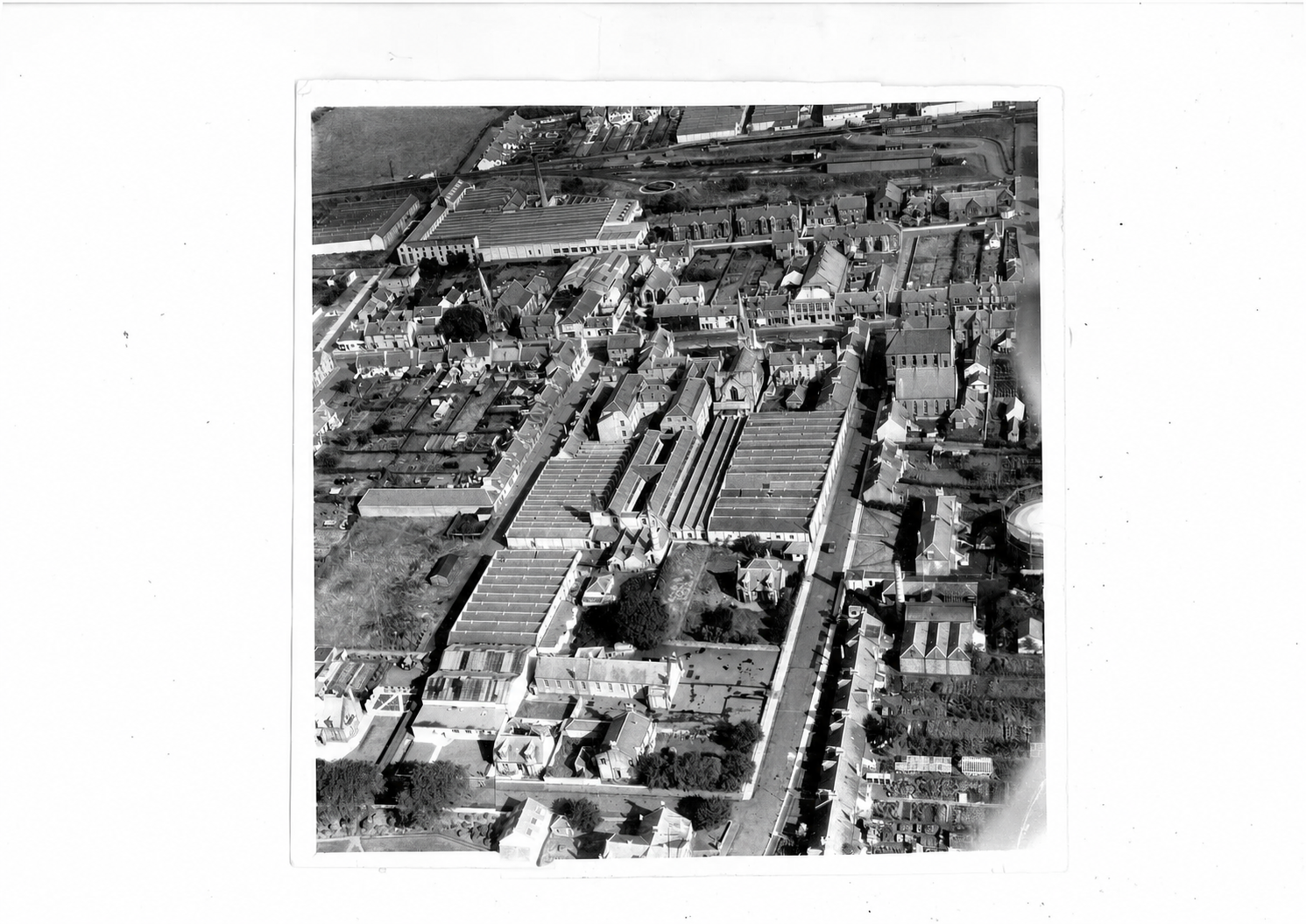
The first machine was installed beside the clipping mill at the Townhead. It took months of work to make it run properly. Once it did, demand outstripped production. Two more machines followed within a year; within a decade, the new factory held twenty-four.
Beyond Darvel lace
When mechanisation displaced handloom work, Morton introduced handwoven tapestry, creating employment that could use the weavers’ existing skill.
A pair of costly double-plush curtains in a London hotel prompted a cheaper chenille alternative—and another substantial line of work.
A small hearth rug in a London shop window led eventually to hand-tufted carpet factories in County Donegal and orders for palaces, parliament buildings and ordinary homes.
Whatever he made up his mind to do, he did it thoroughly.
The man beyond the mill
Morton read Scott, Dickens and Burns. He grew prize pansies, bred hackney horses at Gowanbank, judged internationally, studied architecture and later took up farming and fruit growing in Ireland.
The interests were varied; the method was consistent. Before beginning fruit growing, he studied bees because successful pollination would be essential. Curiosity, close observation and preparation ran through both his business and private life.
A life in seven moments
Alexander Morton was born in a weaver’s cottage at Mount Holy, Ranoldcoup Road, on 9 February.
By fifteen he had saved £16 and used it to buy a new handloom.
He married Jeanie Wiseman, whom he had met through a church singing class.
At an exhibition in London, Morton saw a power-driven lace machine working and recognised what it could mean for Darvel.
The business expanded into tapestry, chenille and carpet making, with production in Carlisle and County Donegal.
Morton died at Bruckless in County Donegal on 28 December and was buried in Darvel on New Year’s Day 1924.
A public memorial overlooking the Irvine Valley was unveiled near his former home at Gowanbank.
Remembered in the valley
Morton died at his fruit farm at Bruckless in County Donegal on 28 December 1923. His remains were brought home and buried in Darvel Old Cemetery on New Year’s Day 1924.
Four years later a memorial designed by Sir Robert Lorimer, with sculpture by Charles Pilkington Jackson, was unveiled beside the A71 near Gowanbank. Its panels place handloom weaving beside the power loom: the two worlds Morton’s life connected.
“Alexander Morton, who led this valley to industrial fame and prosperity.”
Explore Darvel lace
Sources and attribution
This page is based principally on an unattributed transcription found in the Discover Darvel research collection. Its likely source is the Alexander Morton chapter in Alexander Grant McLeod’s The Book of Old Darvel and Some of Its Famous Sons—published locally by Walker & Connell—but that attribution is awaiting confirmation against a printed copy. Dates on which surviving accounts differ have been described cautiously.